

Dear reader. It is probably best you are not eating when you read this.
Your pillow is not quite the innocuous household item you may have thought it was. Every year, the average person is shedding between 600g (1.3lbs) to 1.5kg (3.3lbs) of solid, extraneous waste from their body. This waste is principally comprised of dead skin, sebum, sweat deposits, and lightest of all, hair. A large proportion of this debris ends up on and around the pillow while we are sleeping, especially so, because the scalp, as a biological jungle, has a high density of skin cells, hair follicles, sebaceous glands and sweat glands, not to mention an active and diverse microflora.
Now here's the real kicker: these are all prime foods for a type of tiny arachnid known commonly as dust mites. If you are a dust mite, the pillow is prime real estate. Not only are you given a sweet, continuous supply of proteins, fats, carbohydrates, even water, the pressure of the head against the pillow, and the body heat thereof, keeps everything nice and toasty and dust mite populations thrive. Many people notice that their pillows seem to get heavier over time, perhaps they chalk it down to sweat or sebum collecting deep in the innards of the pillow. This is only partially true though.
As dust mite populations thrive they gain weight. Not just that, as the mites grow in size, they literally shed and discard their exoskeletons, and grow new ones. They produce saliva, enzymes and also partially worked on skin cells, sebum material etc, which they have dined upon. Most gruesome of all, they defecate every single day, and a single dust mite can produce 100s of fecal pellets per month. This faeces is the predominant cause of the common, often highly unrecognised allergies associated with dust mites. In short, because of the secret life going on in our humble pillows, not only do they get increasingly heavy over time, they become more potent vectors for said dust mite populations to grow and flood out into other areas.
Oh My Goddess, I had no idea, what can I do about this?
Dust mites do not like all pillows equally.
Dust mites thrive in soft, porous, moisture-retaining fabrics where they can hide and feed on skin flakes and human oils. Down and feather pillows, cotton, polyester fiberfill, and other synthetic microfibres are all perfect for the dust mites to burrow away in and get all cosy and established. On top of that, they all have a propensity to trap water, which the mites require access to. Dust mites need a humidity of approx 50% to survive and reproduce; below that they desiccate.The most effective anti-dust mite pillow material is natural latex (genuine from the rubber tree). It has a dense, non‑porous structure that is hard for mites to burrow into. In addition, natural latex is naturally resistant to moisture retention. Other pillow innards of note include millet, buckwheat and spelt husks. As the natural husks are just hard, loose insoluble fibres they do not provide any cosy nesting for the mites, a little like trying to sleep on a park bench. Furthermore, if not quite to the same degree as the natural rubber, this loose, filling is not prone to moisture retention, and dries rapidly compared to most other materials.

Ok, but what can I do about my pillow today?
One of the simplest and most effective things you can do to kill off the the dust mite colony in your pillow today is to freeze it for 24 to 48 hours. Simply place your pillow in a large enough plastic bag, tie a knot at the top, and put it in your freezer. You want to keep your pillow very cold at -18C (which is standard freezer temp these days) for this prolonged period. Dust mites are hardy creatures you see, and much like cockroaches, they can survive short snaps of subzero temperatures. As a result, 24 hours, ideally 48 hours, is the timeframe I recommend to remove them.
Do note, however, that this move, though indeed very effective, does not remove the allergenic fecal matter and general body part debris that had prior built up in your pillow; all of that will still be there. Furthermore, if your pillow is comprised of dust mite friendly ingredients, future reinfection is still highly likely. Routine freezings will be in order.
What about pillow cases?
One of the best natural material for pillowcases is silk. Silk pillowcases are more effective at deterring dust mites than cotton because their smooth, dense fibres make it harder for mites to grip, hide and pass though, whereas cotton’s porous, textured surface provides more hiding spots. Silk is naturally hypoallergenic and contains proteins that can inhibit microbial growth, creating an environment less favourable for mites, while cotton does not offer the same antimicrobial benefits. Additionally, silk wicks away moisture and attracts less dust and allergens, reducing the humidity and food sources that dust mites thrive on, whereas cotton tends to retain more moisture and dust. When combined with regular washing, and a natural latex or organic buckwheat, millet or spelt husk pillow, a silk pillowcase encased "head support" yields the most maximal dust-mite–reducing measures.
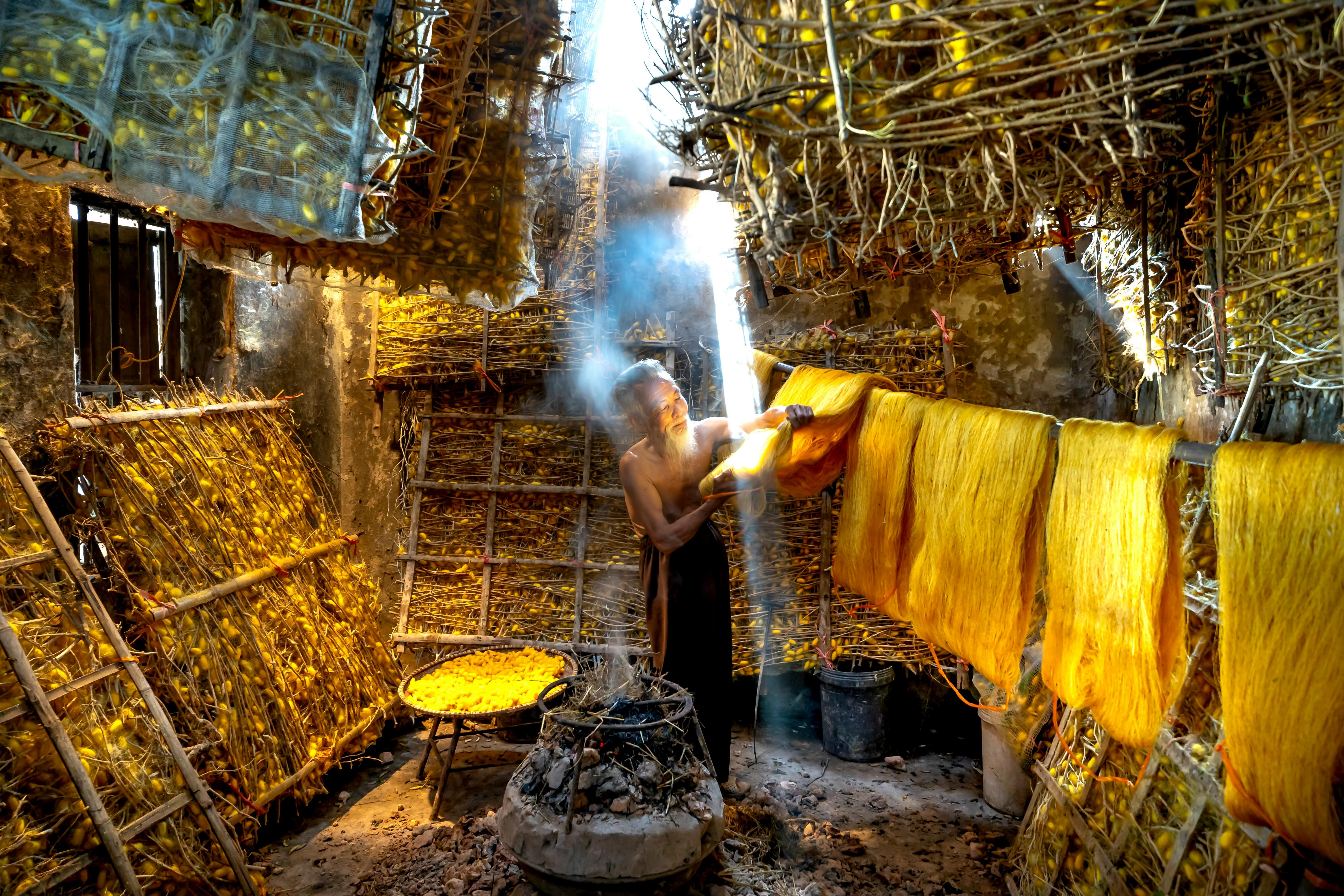
For a high-quality, 100% mulberry silk (zero synthetic fibres or other fibres) pillowcase, made in Vietnam by skilled craftsmen and women, of a long established lineage in the silk weaving tradition, at a great price, CLICK HERE.
Kyle Vialli (2025)


