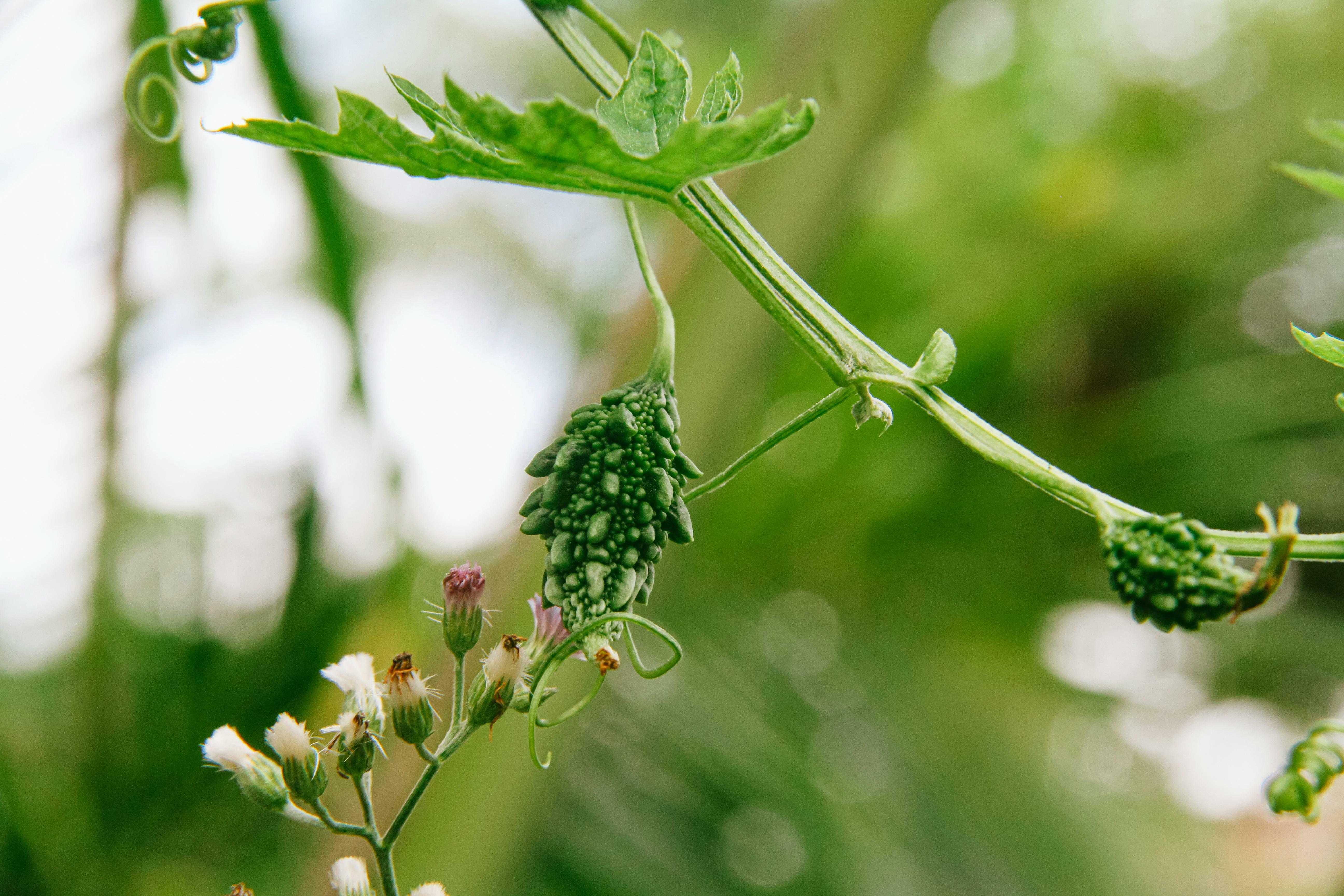
Perhaps you have not knowingly tried the richly health-imparting edible in question, but chances are at some point you have seen at least one of the below varieties of the fruit known in English as bitter melon – whether abroad or in a variety of Ethnic, Asian, African or Caribbean market stalls/supermarkets across the country.
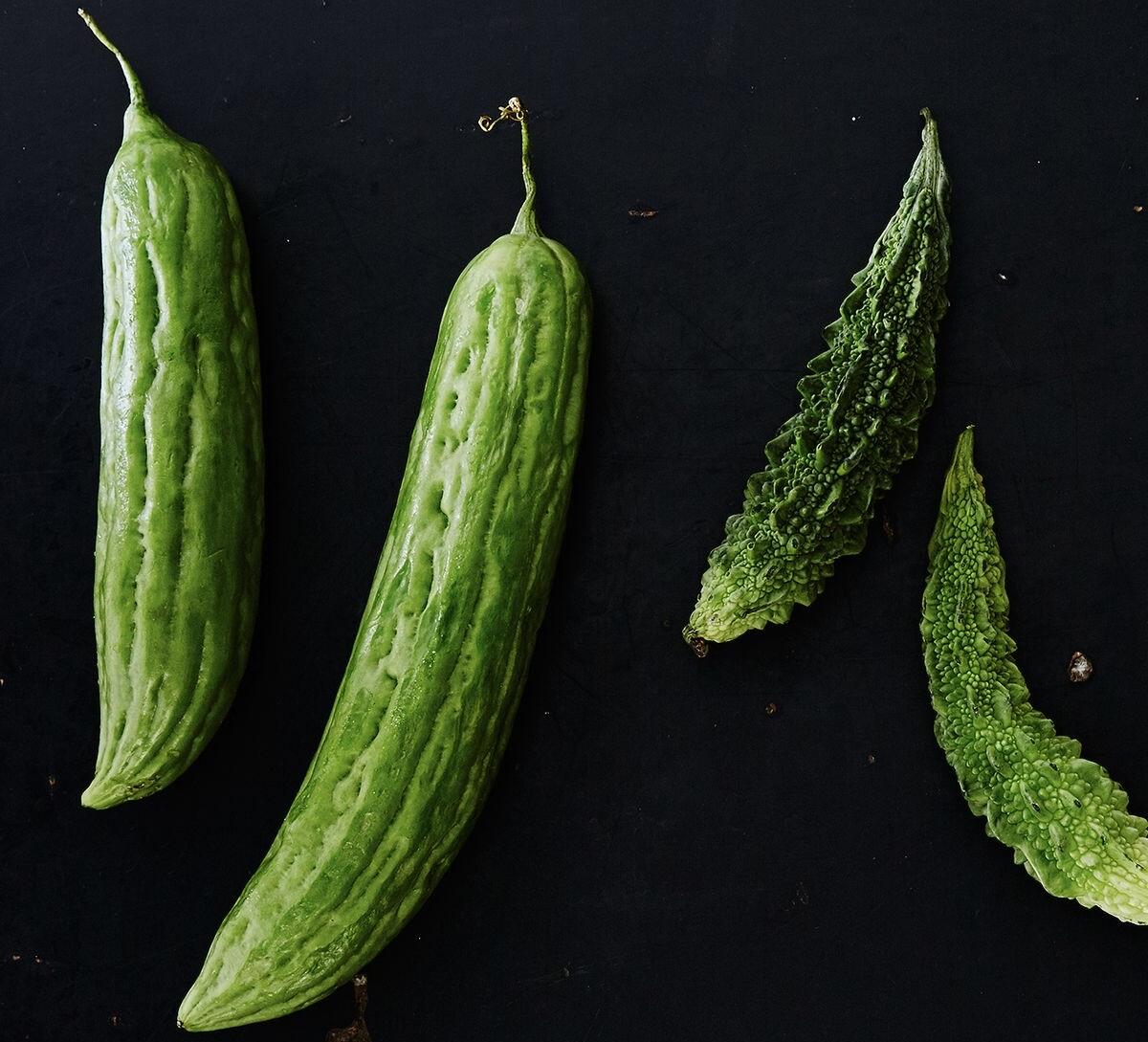
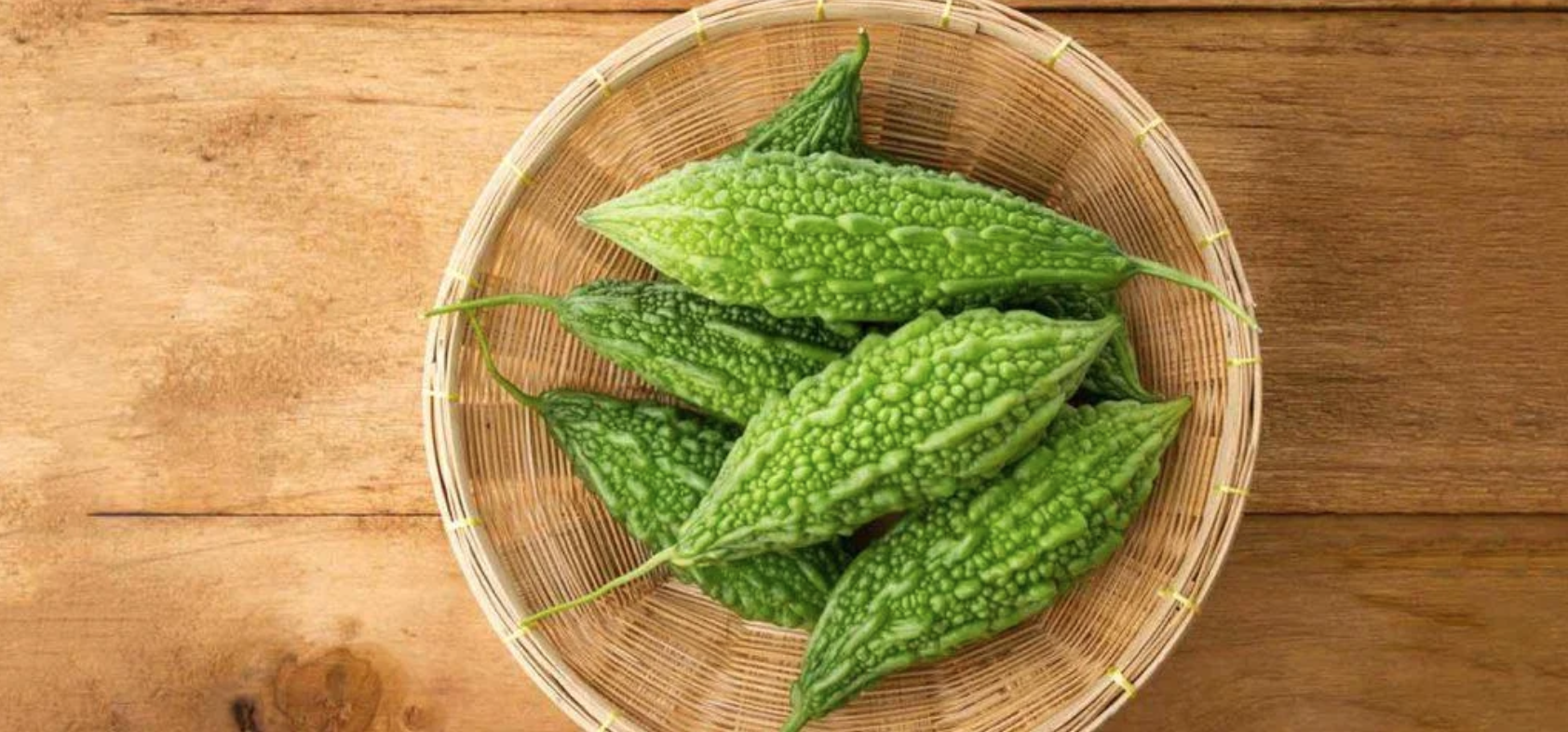
Pictured below, on the left is the the light green, often larger, and considerably more smooth Chinese variety known as Ku Gua. On the right, is the dark green, pointy Indian variety of bitter melon known as Karela. Either variety can come in a range of sizes. Regardless of the cultivar you source these unique fruits pack a bitter, highly nutritious punch with broad medicinal applications. Bitter melon is a long esteemed component of both Ayurveda and Traditional Chinese Medicine and is used as a vegetable throughout the cuisine of these rich traditions. Bitter melon is also one of the key ingredients of Okinawan cooking and the fruit is often cited as being an integral reason behind the Okinawans acclaimed long-lifespans (greatly exceeding the rest of Japan in general).
Bitter melon is widely used in the cuisines of East Asia, South Asia, and Southeast Asia and the Caribbean islands. In India, I would always see it purchased in larger quantities by the locals, and by many families it is consumed everyday, or at least very regularly throughout the week, often with curd/yoghurt, or in curries, to offset its bitterness. It is staple nutritive in many parts of Asia and is highly esteemed for its medicinal properties wherever it is consumed. Below I list the 6 main reasons why this fruit is so revered. Point 4, in particular, has special significance, when living in the hot, sultry Asian tropics, but is undoubtedly relevant to pretty much everyone, regardless of where folks are living, due to the number of potential ways that humans can be infected nowadays.
Here are six reasons why you should make bitter melon, raw or cooked, a regular part of your nutritional arsenal.
- Bitter melon is a diabetics friend of the highest calibre. Bitter melon contains compounds that act like insulin, helping to naturally lower blood sugar levels and combat insulin resistance. For normal individuals not on the diabetic spectrum, bitter melon can be used generally to lower blood sugar levels when an excess of sugar (incl fruit) or alcohol is consumed (accidentally or otherwise). In the week I spoke to a gentlemen here in Goa who was giving his sugar-obsessed children bitter melon throughout the day to make sure their blood sugar levels, and therefore their moods, remained at a more even keel. Truly, bitter melon can have a dramatic effect upon our ability to metabolise sugar so those that suffer from hypoglycemia (chronic low blood sugar levels) should only consume the food with an appropriately balanced meal.
- Bitter melon is an effective blood cleanser with potent antiviral properties. It is also noted for its ability to bind-up with (chelate) heavy metals and take them safely out of our systems. My favourite way to reap the benefits of the fruit is in my morning juice. The whole clean fruit can be juiced. Easy peasy.
- Increased immunity and anti-cancer properties. A variety of international studies have demonstrated bitter melon’s efficacy in preventing or managing a broad variety of cancers. Researchers found that bitter melon juice launched a two-pronged attack by: inducing programmed cell death (apoptosis) along several different pathways, and by starving cancer cells of the sugar they need to survive (this latter point relating to point 1).
- Bitter melon contains anti-parasitic compounds that help kill a variety of intestinal worms, nematodes, flukes and other dysbiotic parasites (including bacterial infections) that have made a home in the ducts and recesses of your body. It even helps to eliminate the toxins that these parasites produce and leave behind as they die. Liver parasites such as flukes that have travelled down the intestines into the ducts of the liver can also be targeted. For an optimal anti-parasitical strategy using bitter melon, I recommend eating at least 100g of bitter melon, whether raw or cooked, everyday for 30 days, alongside adding enough fruit to your home made juice to give you at least 30-50ml of bitter melon juice. Whilst the whole consumption of the bitter melon will target the entirety of the intestines and partially the related organs such as pancreas, gall bladder and liver that are connected to the intestines by portals/ducts, the raw melon juice will be able to travel more efficiently throughout the body, by way of the bloodstream, whereby it will reduce parasite activity and bacterial infections in the bloodstream, tissues and organs.
- Skin benefits. Taken regularly, bitter melon is said to have a “glowing” effect on the skin and is helpful in treating acne, psoriasis, and eczema. This capacity all ties in of course with point 2.
- Bitter melon is capable of naturally lowering blood pressure, especially when taken as part of a raw juice due to the concentration of its photonutrients. Many people report coming off (or having to reduce) any blood pressure medications they might be taking, when making bitter melon part of their regular diet.
How to prepare bitter melon.
To prepare bitter melon simply top and tail and then longitudinally cut along the middle.
Next use your thumb to scoop out the inner sponge and seeds, and discard.
Now you can thinly slice your bitter melon.
This next step is optional, but ultimately recommended. Massage sufficient salt into the bitter melon and let it sit for at least 1 hour. Overnight is excellent. The salt will help to leach out the bitterness of the fruit, alongside some secondary plant toxins. You can rinse the salt off before using if you prefer, though many people keep it on, or just give it a light rinse. For those, who would prefer to not use the salt method, there is another method that you can also use. Simply soak in a bowl (non-plastic, of course) of water, for at least 1 hour, overnight is also excellent. Strain and use.
At this point, you can add to your meal prep.
Stir fries of all persuasions, boiling, roasting, even direct on salads if you have let it marinade or soak. This is one of my fave "fruit vegetables" to add to stir fries or to simmer in coconut curry sauce alongside numerous other delectable medicinal ingredients, herbs and spices. It is also an excellent addition to green juices.